Almond Fintech
TL;DR
Borderless Financial Technology For Everyone
I redesigned a fintech platform for three distinct user types — clients, agents, and admins — inside a single coherent system. A mid-project pivot from mobile-first to desktop-first exposed better design decisions than the original brief would have.
Sending money across borders shouldn't require a finance degree
Almond Fintech came to me with a platform built around an important mission — cross-border transfers and credit tools for underserved users — but a user journey that was getting in its own way.
I joined a team of four designers as UX/UI lead on a five-month engagement to identify where the experience was breaking down and redesign it from the ground up for three distinct user types: clients, agents, and administrators.
One platform was trying to serve three completely different mental models at once
Clients, agents, and administrators all used the same interface but had fundamentally different goals and technical comfort levels.
A client sending a first international transfer needed simplicity and trust signals. An agent processing multiple transactions needed speed and batch visibility. An administrator needed control and auditability.
The existing journey was designed for none of them specifically — which meant it worked poorly for all three.
User interviews confirmed that drop-off was highest at the points where the platform forced all three user types through the same decision flow.
I helped design three distinct experiences inside one coherent system
The strategic direction was role-aware UI — the interface would adapt its information density and task priority based on who was logged in, without requiring three separate products.
I excluded a full design system rebuild from scope deliberately: with five months and a parallel development handoff, building new components from scratch would have delayed the flows that actually needed to ship.
We worked in Figma with a shared component library, running weekly reviews with the project manager to keep stakeholder alignment tight.
The biggest constraint came mid-project when stakeholders redirected the team from mobile-first to desktop-first — a pivot that required us to restructure several flows we had already refined.
The mobile-to-desktop pivot forced better decisions than the original brief would have
When stakeholders shifted priorities to desktop mid-project, the instinct was to treat it as a setback.
Instead, it exposed a real gap: our mobile-first flows had been optimizing for simplicity at the cost of the power features agents and admins needed.
The desktop canvas gave us room to surface those features without cluttering the client experience. We rebuilt the transaction and reporting flows for desktop first, then adapted back to mobile — which produced a more honest hierarchy than our original approach.
The bounce rate on the transfer initiation flow dropped 5% after the restructured flow went to development.
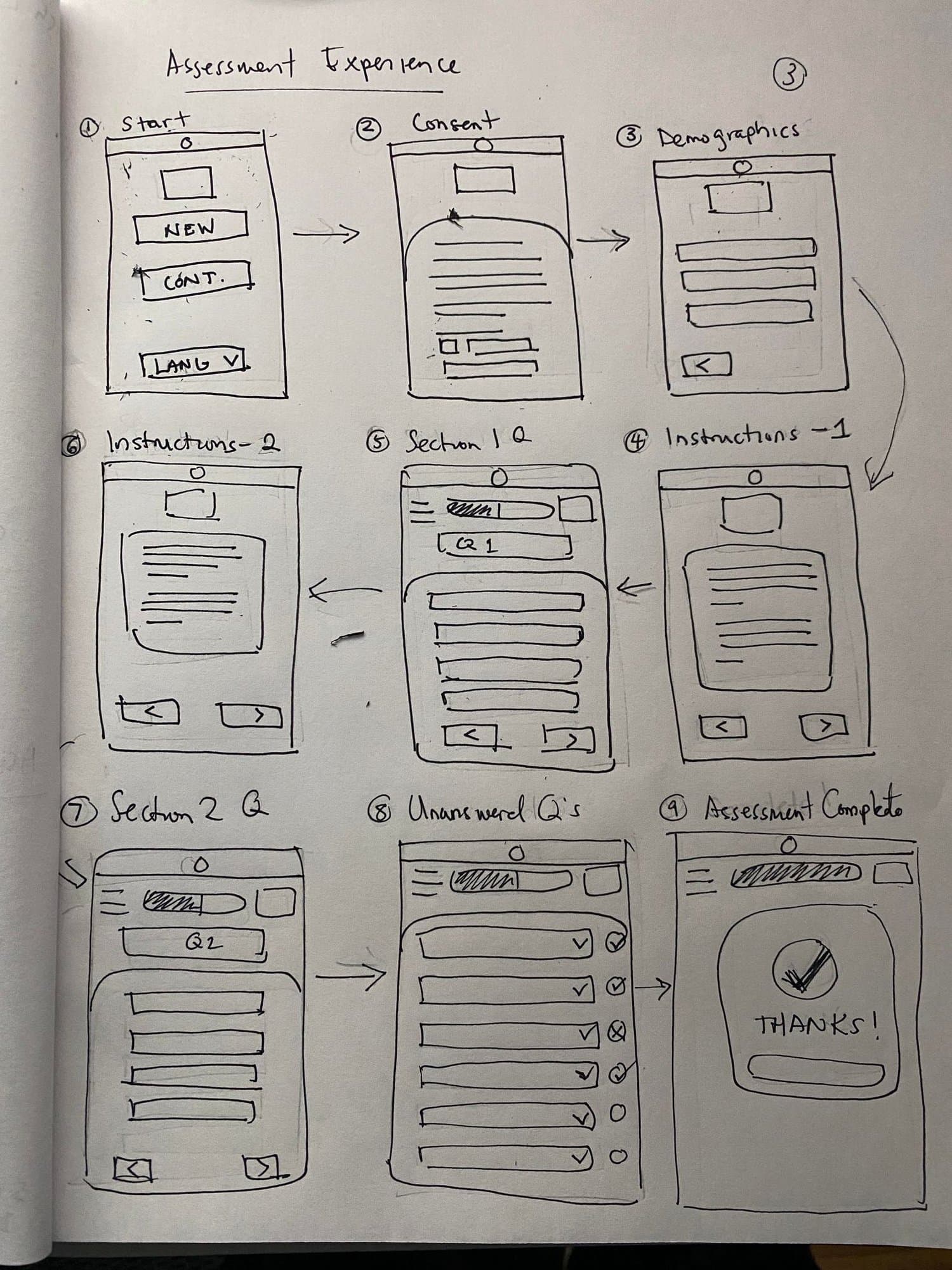
Full assessment flow mapped out across 9 screens — start, consent, demographics, instructions, questions, unanswered review, and completion
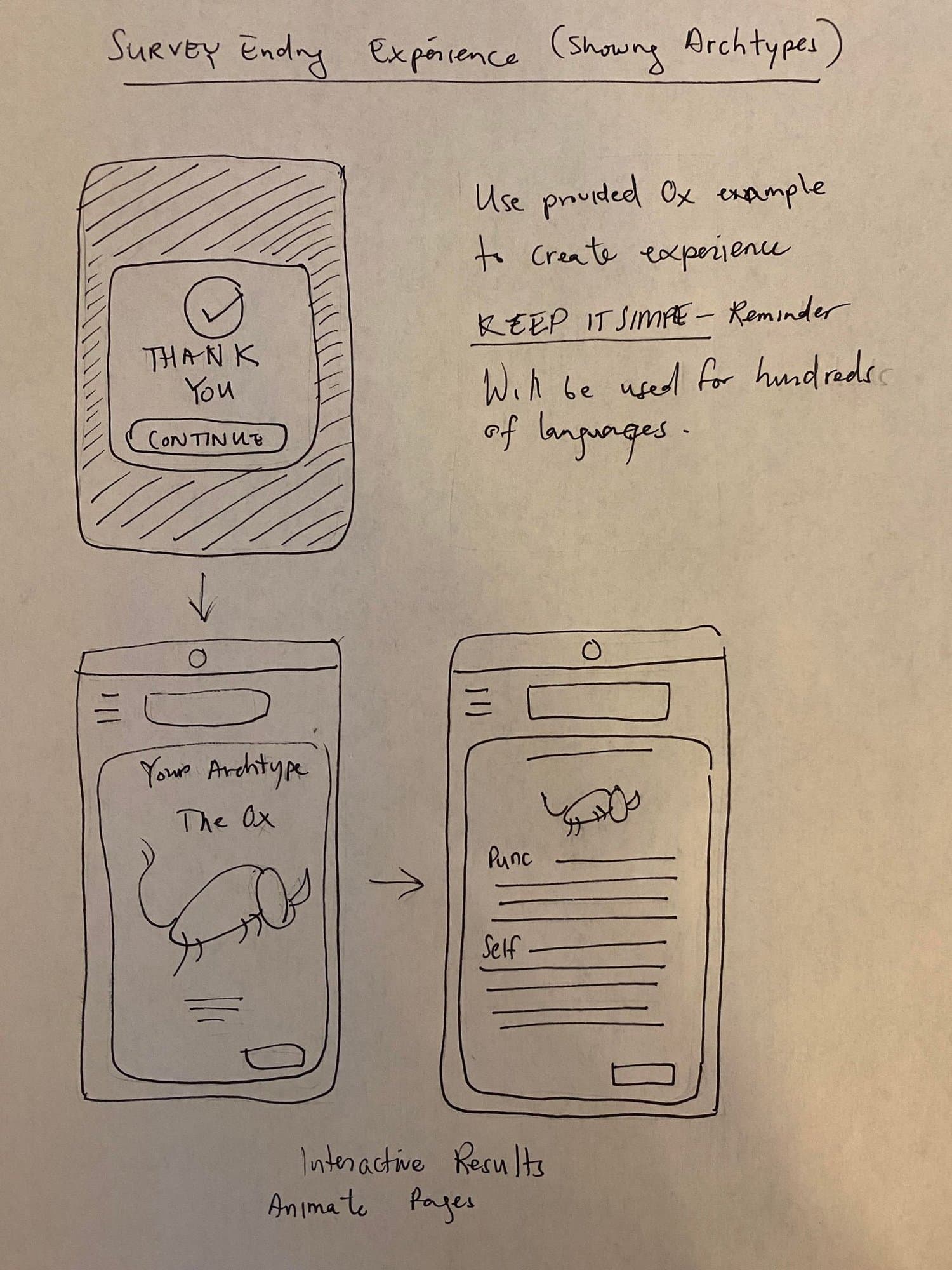
Survey ending experience wireframe — archetype reveal with animated results pages, designed to work across hundreds of languages
A redesigned journey that lifted engagement, downloads, and retention across the board
The redesigned platform shipped to development on schedule with full stakeholder sign-off. Post-launch results across the Almond mobile experience showed a 10% increase in engagement, a 10% increase in downloads, and a 15% increase in customer retention.
The bounce rate on key conversion flows dropped 5%.
Those numbers reflect what role-aware UI actually produces: when users find an interface that matches how they think, they stay.
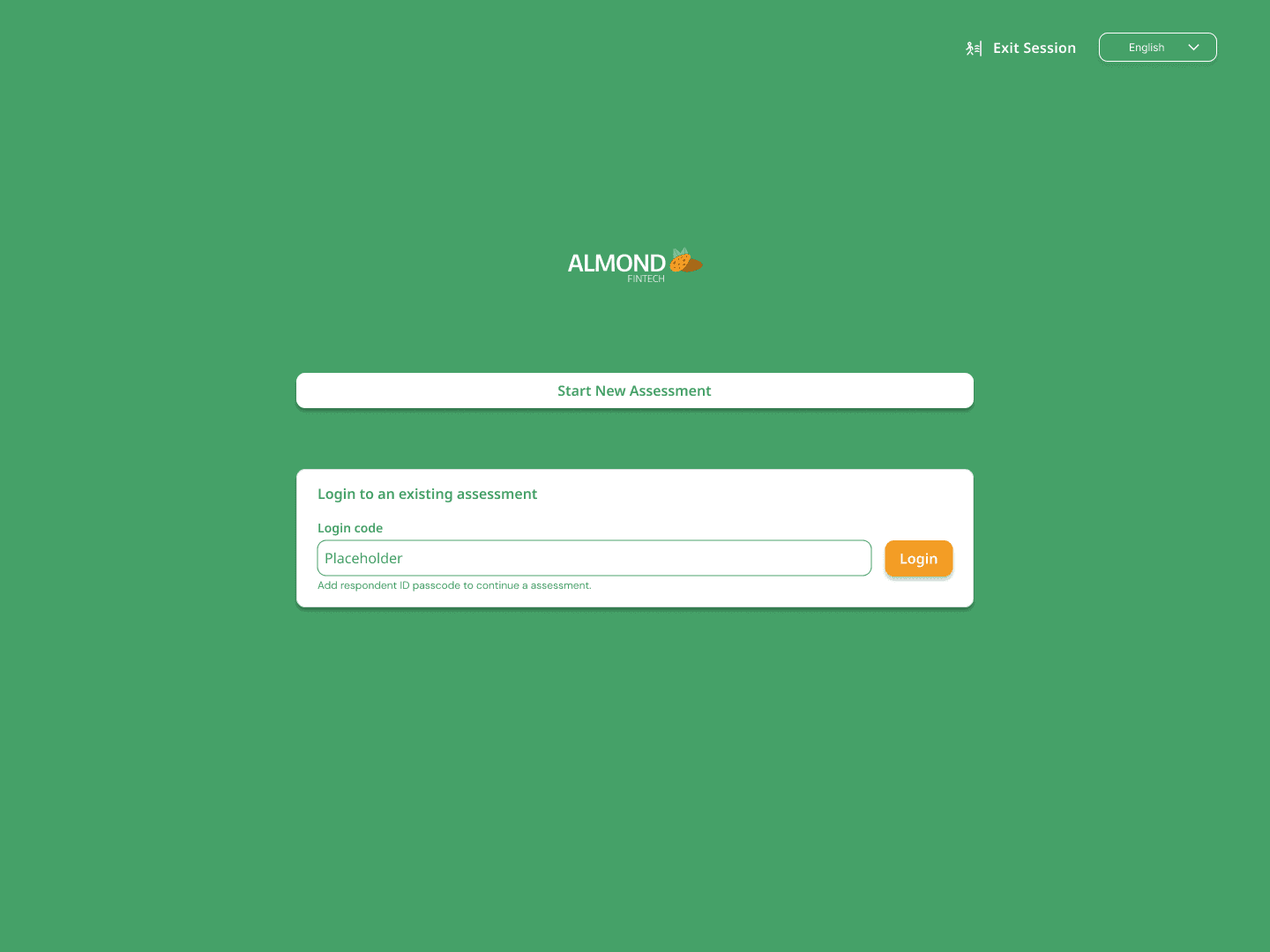
Login screen — agent portal entry point for loan officers
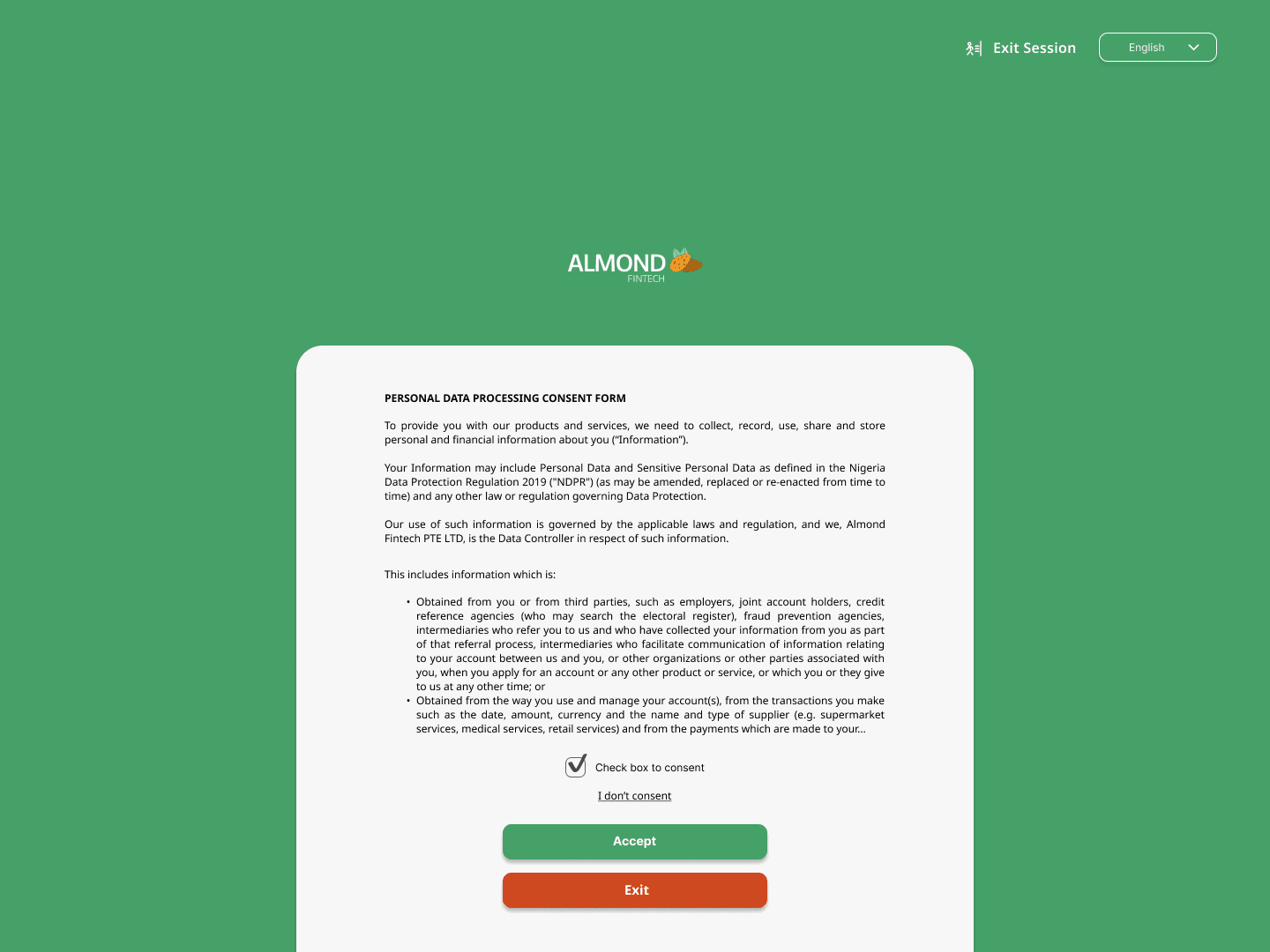
Personal data consent form — designed to be clear and trustworthy before any data collection begins
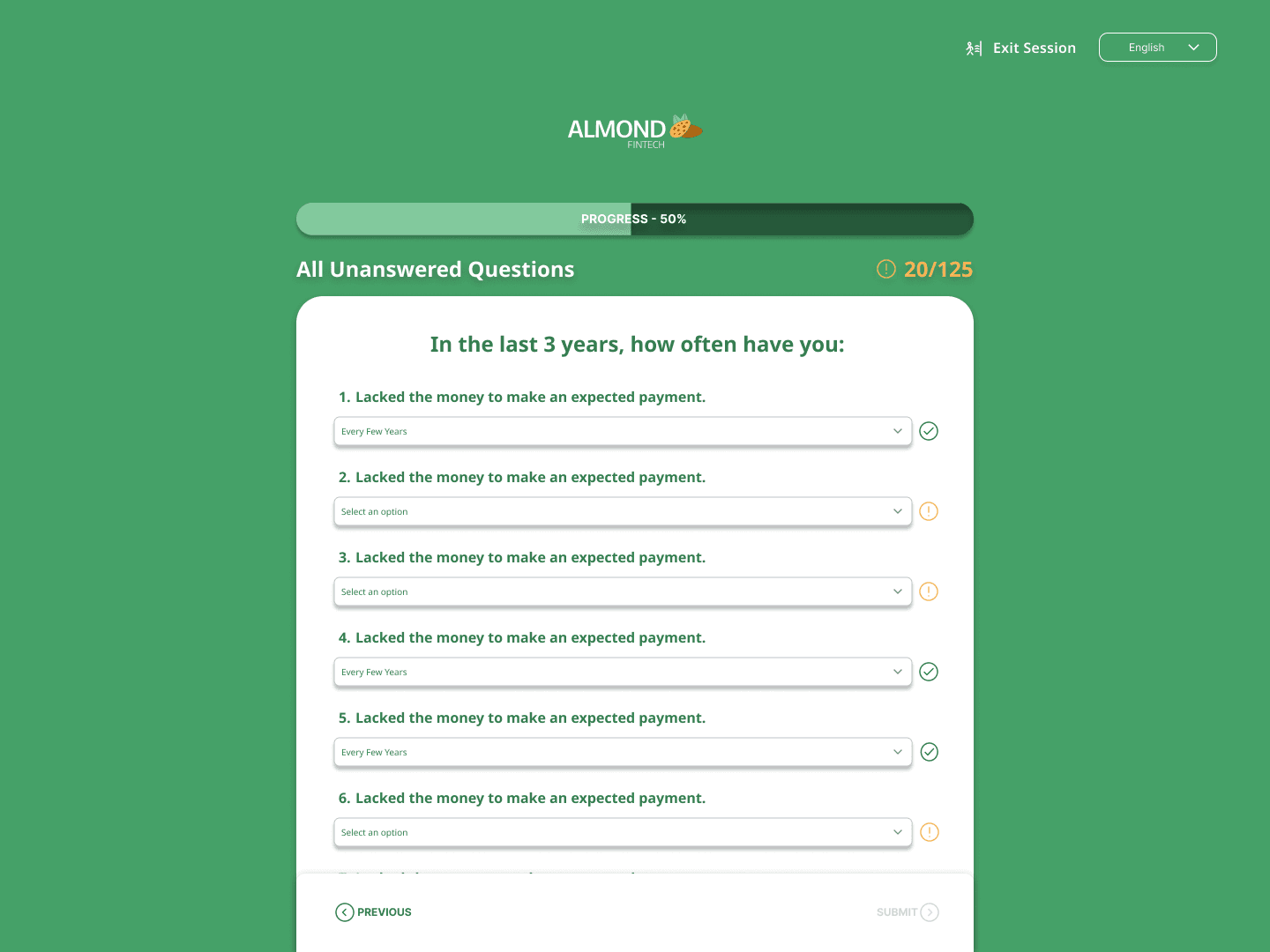
Assessment question flow — Likert-scale questions with progress tracking and unanswered question indicators
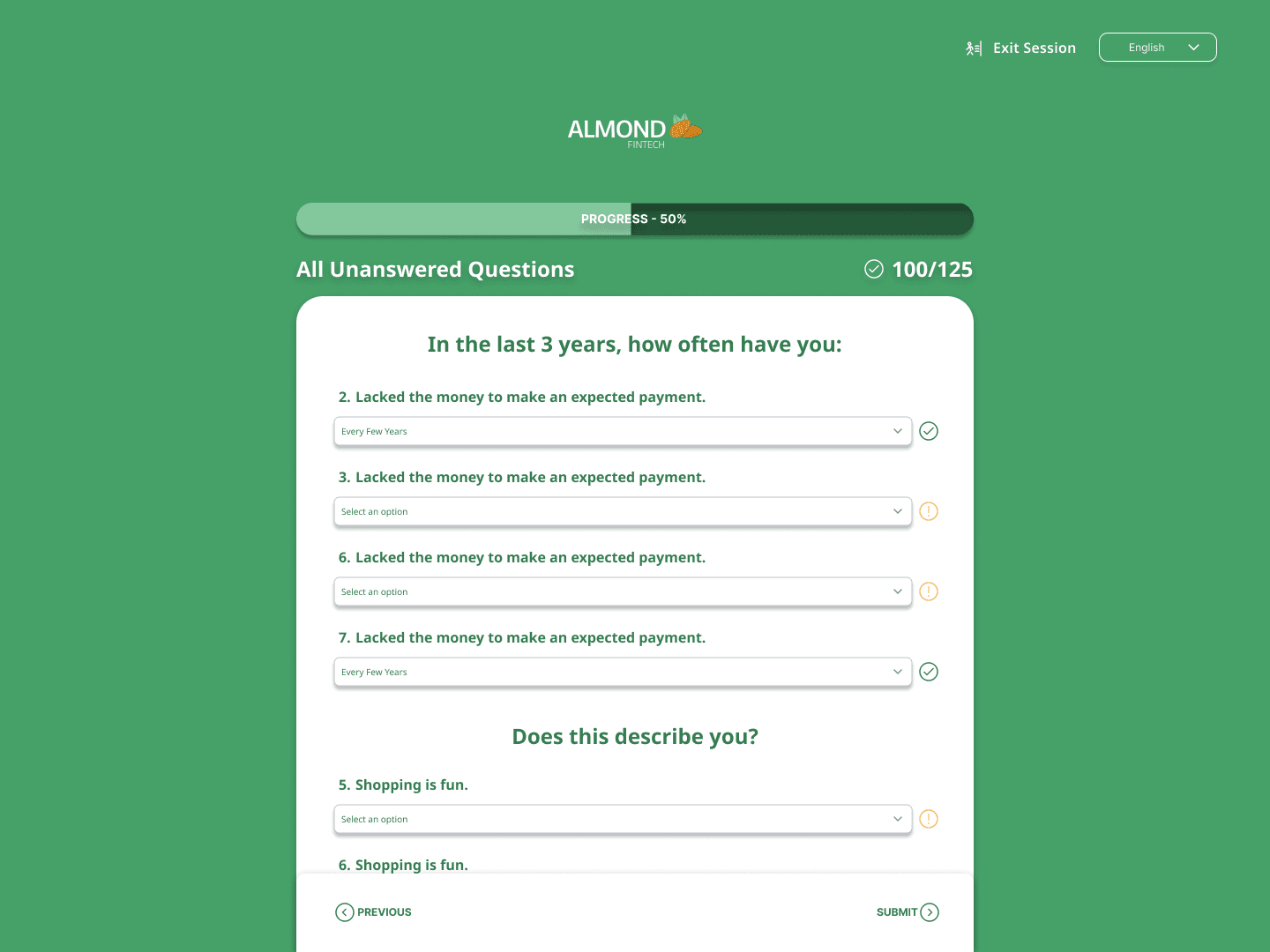
Unanswered questions review — flagging incomplete items before final submission
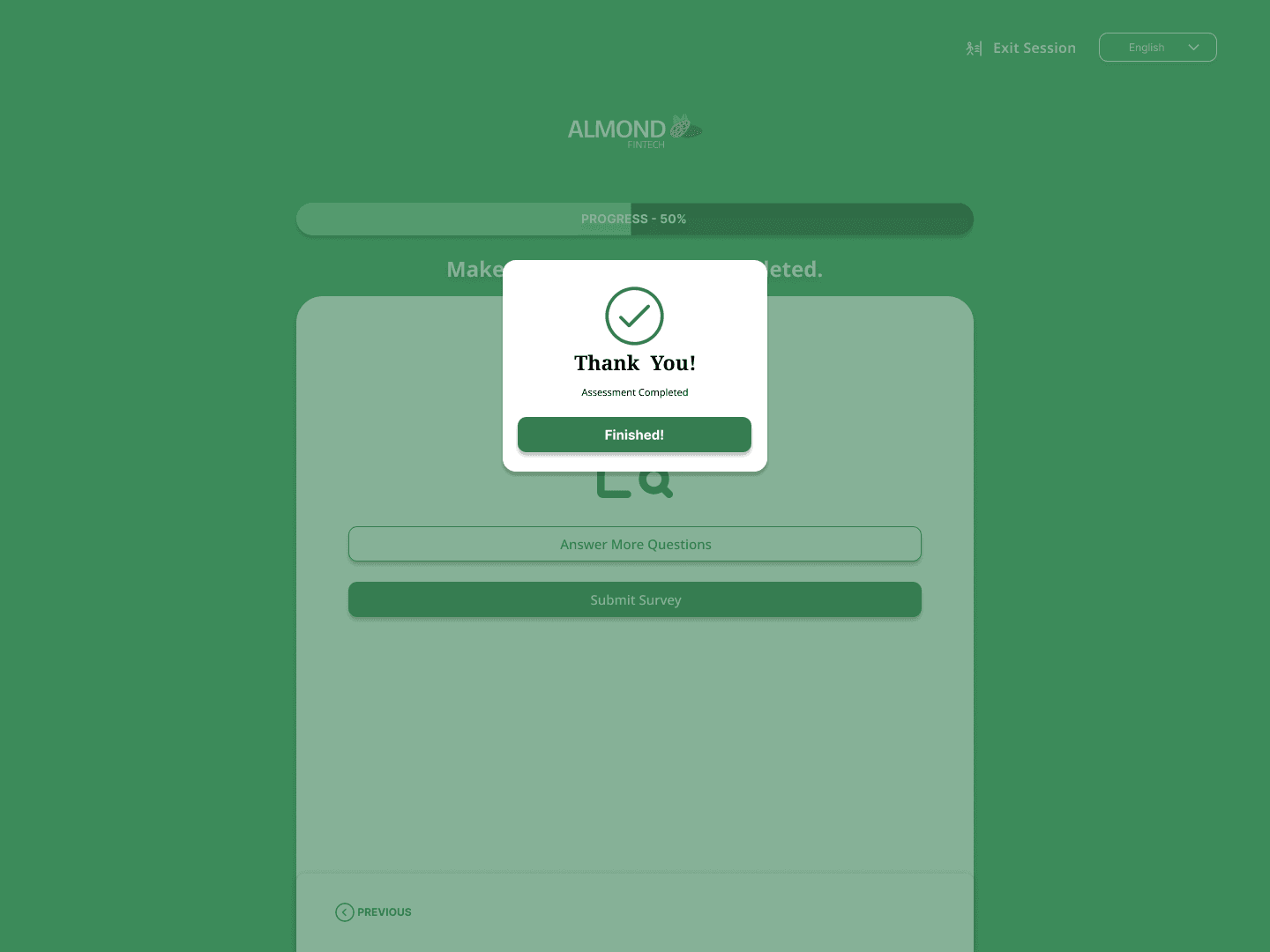
Assessment complete state — confirmation modal before results are revealed
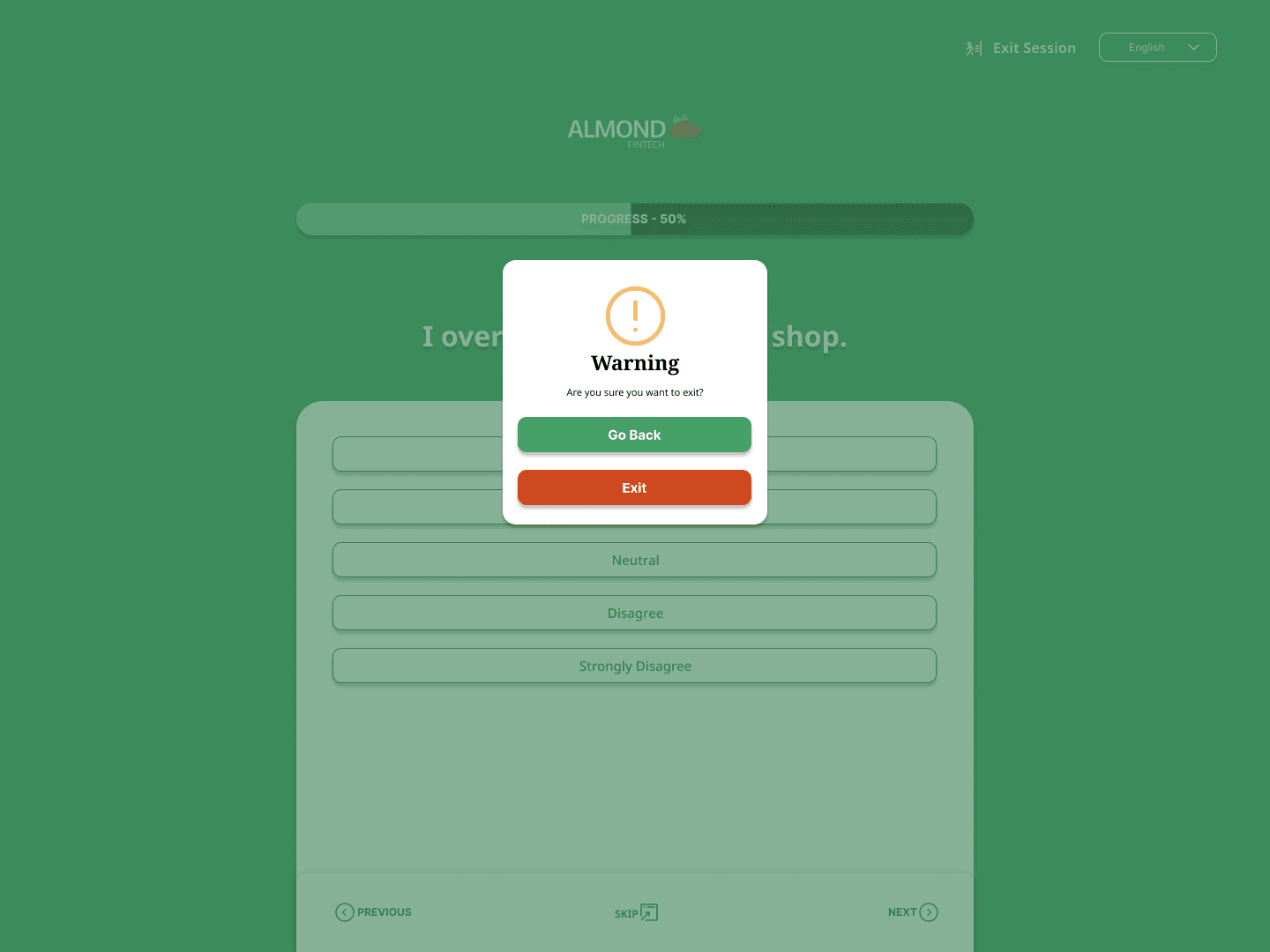
Warning modal — exit confirmation to prevent accidental session loss
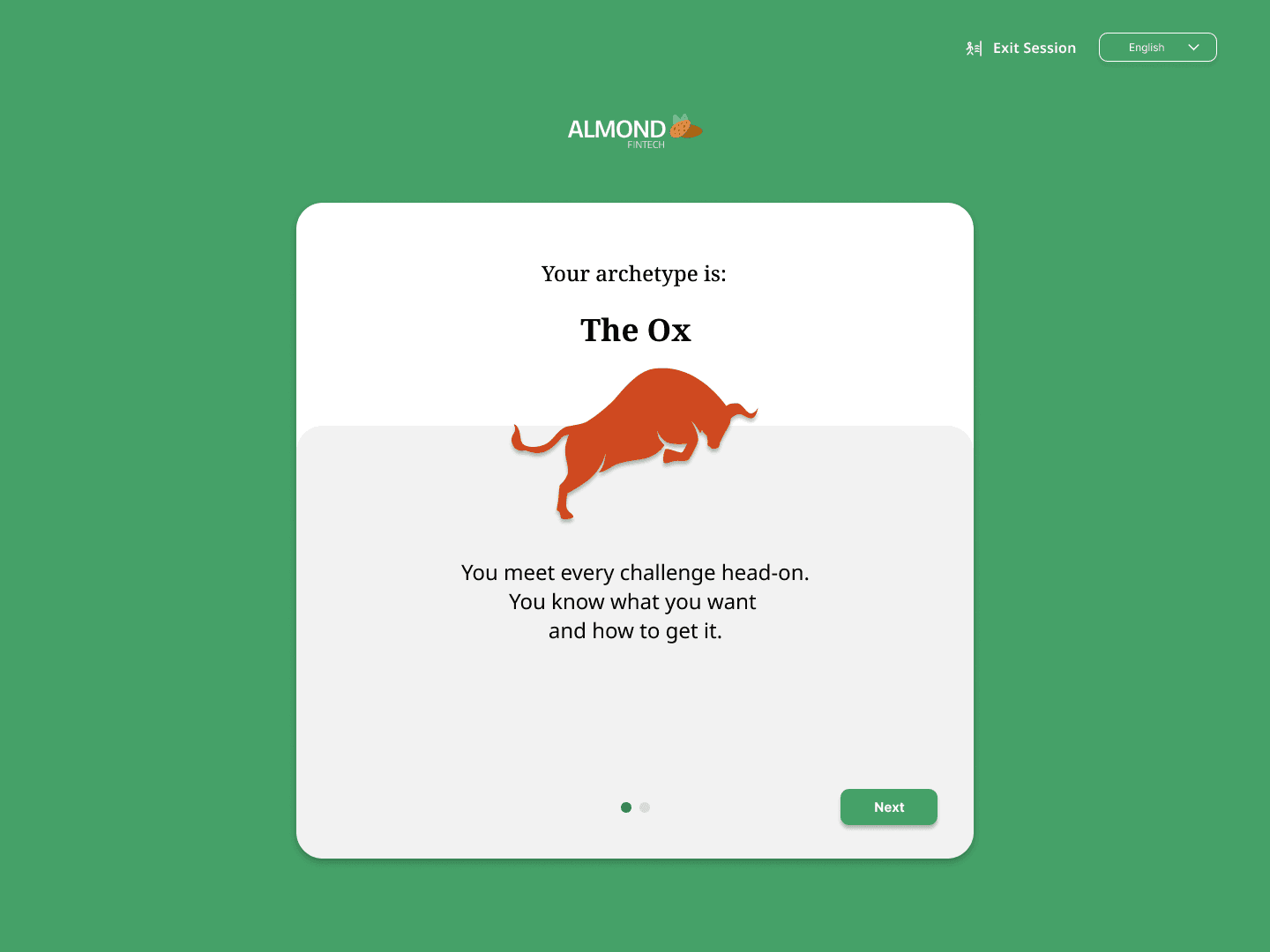
Archetype reveal — 'Your archetype is: The Ox' — the payoff moment after completing the assessment
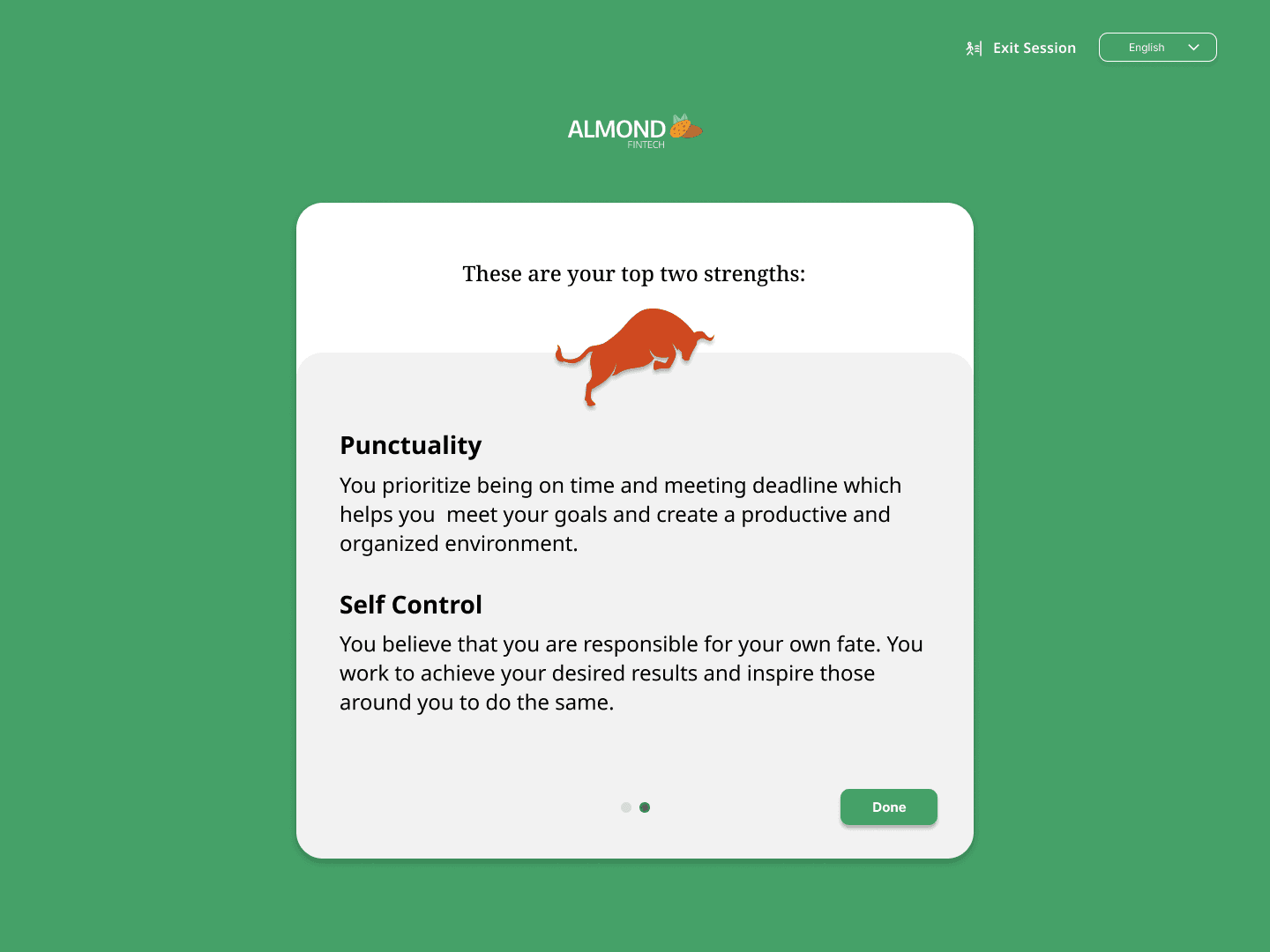
Strengths breakdown — two top behavioral strengths displayed with supporting descriptions
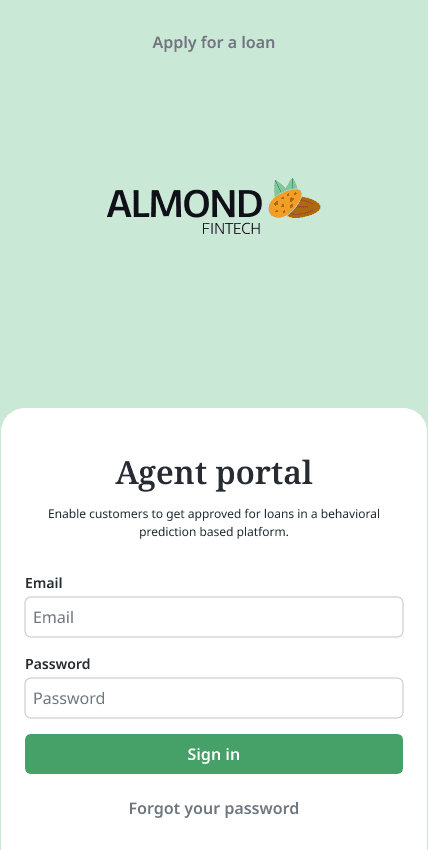
Mobile login — agent portal on mobile, designed for field workers conducting in-person assessments
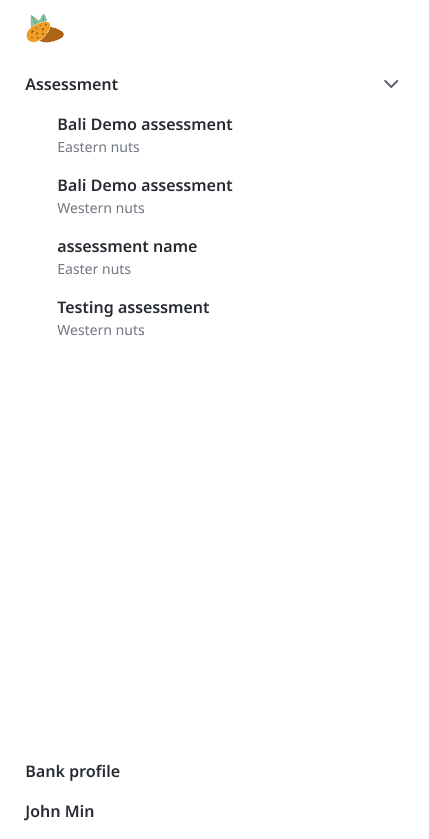
Mobile assessment list — survey management view for field workers
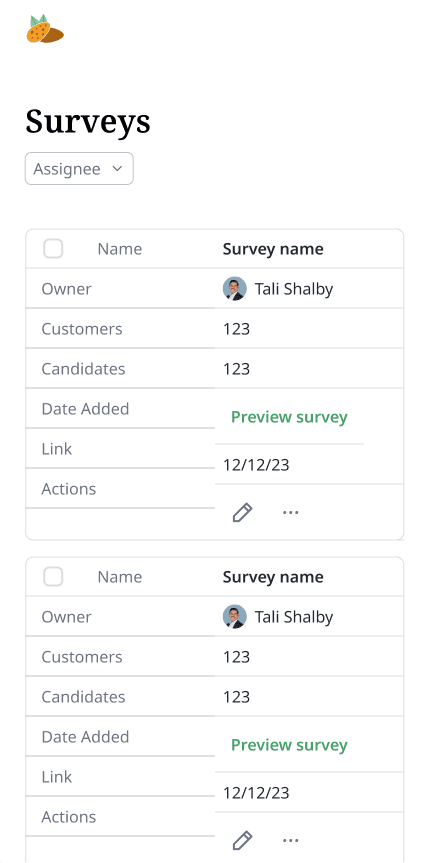
Mobile surveys dashboard — assignee filtering and survey completion tracking

Mobile field workers view — customer list with survey completion status and contact actions
What this project taught me about designing for users you can't assume
The mobile-to-desktop pivot was the best thing that happened to this project. Constraints that feel like blockers often expose assumptions worth challenging.
Role-aware design sounds obvious in hindsight, but most fintech platforms skip it — they build for the average user and frustrate everyone else.
I would push earlier for role-specific usability testing rather than testing with a general user group. Our research was strong, but a dedicated agent-testing session would have caught the batch-processing gaps sooner.
Next: I'd want to instrument the post-launch flows to see whether the retention lift was driven by the onboarding redesign or the transfer flow — that distinction would shape where UX investment goes.